
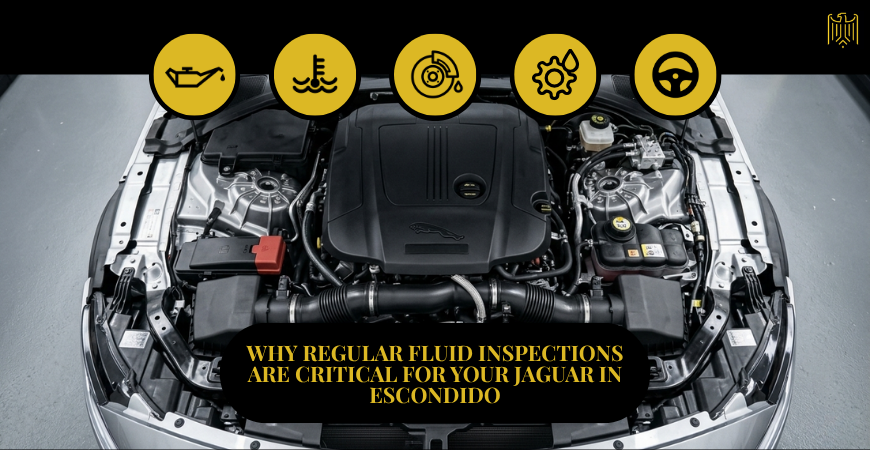
A Jaguar is a precision-engineered vehicle that depends on a complex network of fluids operating at exactly the right levels, viscosities, and conditions to function the way it was designed. Unlike mass-market vehicles where fluid issues often announce themselves loudly before anything serious happens, Jaguar’s engineering tolerances are tight enough that fluid degradation or loss can compromise critical systems well before a warning light appears on the dashboard. Escondido German Auto has been caring for Jaguar vehicles in Escondido and across North San Diego County for decades, and regular, thorough fluid inspections are one of the most effective tools for keeping a Jaguar running the way it should. Here’s what those inspections look for and why they matter on these vehicles specifically.
Engine Oil: Condition Matters as Much as Level
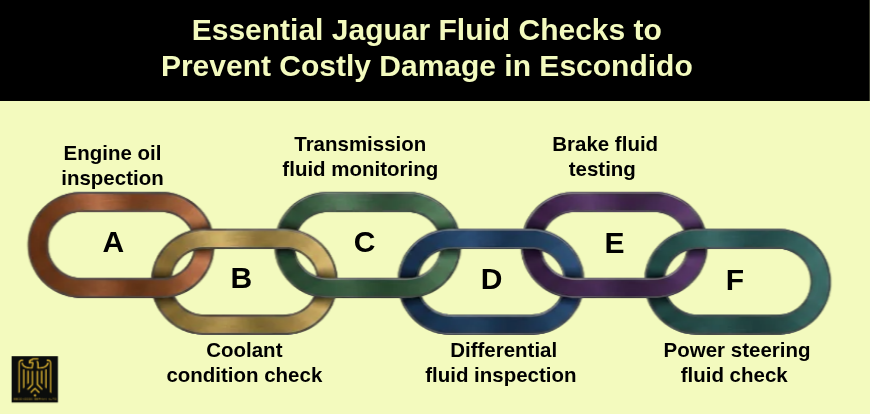
Most Jaguar owners know to check engine oil level, but oil condition is equally important and less frequently assessed. Jaguar’s supercharged and turbocharged engines run at high thermal loads, and oil that has degraded beyond its service life stops protecting critical components even if the dipstick shows an adequate level. Oil that appears excessively dark, gritty, or milky — the last indicating coolant contamination — requires immediate attention. The 5.0-liter supercharged V8 found in many XF, XJ, and F-Type models is particularly sensitive to oil quality because the supercharger bearings and timing chain tensioners depend on consistent oil pressure and viscosity. Escondido German Auto inspects oil condition at every service visit, not just during oil changes, to catch developing engine problems before they become expensive failures.
Coolant: Degradation and Electrolysis
Jaguar cooling systems use a specific coolant formulation designed to protect aluminum components from corrosion. When coolant ages past its service life or the wrong coolant is introduced, the inhibitor package depletes, and the coolant becomes corrosive rather than protective. Jaguar aluminum cooling system components — the water pump housing, thermostat housing, coolant reservoir, and aluminum block passages — are vulnerable to electrolytic corrosion when coolant condition deteriorates. A proper coolant inspection includes checking not just level and color but also pH and conductivity to assess whether the coolant is still protective or has turned corrosive. Catching degraded coolant before it begins attacking aluminum components prevents the costly cascade of leaks and failures that follow.
Transmission and Differential Fluids
Jaguar’s ZF-sourced automatic transmissions and rear differentials carry fluid that the factory often labels “lifetime fill” — a designation that experienced technicians treat with significant skepticism. Transmission fluid darkens and degrades from heat cycling, and dark or burnt-smelling fluid is a sign that the clutch packs and friction surfaces inside the transmission have been shedding material into the fluid. Differential fluids in Jaguar AWD systems and the rear differential of rear-wheel-drive models also require periodic inspection, particularly if the vehicle is used enthusiastically. A fluid inspection at Escondido German Auto includes a visual check and condition assessment of both fluids — catching degraded transmission fluid before it causes shift quality issues or premature clutch pack wear.
Brake Fluid and Power Steering Fluid
Brake fluid is hygroscopic — it absorbs moisture from the atmosphere over time, lowering its boiling point and reducing braking performance under hard use. Jaguar’s performance models are particularly sensitive to brake fluid condition because high-temperature brake events are well within their normal use case. A brake fluid moisture test takes seconds and tells the technician exactly whether the fluid is still within safe limits. Power steering fluid in older Jaguar hydraulic systems also degrades with heat and age, causing seal softening, rack wear, and steering rack leaks when it goes unchecked for too long.
Escondido German Auto: Jaguar Care You Can Trust
Escondido German Auto at 1554 East Grand Avenue has spent decades building expertise in Jaguar, BMW, Mercedes, Audi, Porsche, and Volkswagen service for drivers throughout Escondido, San Marcos, Poway, Rancho Bernardo, and the surrounding communities. Their factory-trained ASE-certified technicians use manufacturer-approved equipment, and every repair comes with a 2-year/24,000-mile warranty. For a comprehensive fluid inspection or any Jaguar service need, call (760) 741-3905 today.
FAQ
How often should a Jaguar’s fluids be inspected?
Engine oil should be checked monthly or before any long trip. Coolant, brake fluid, and transmission fluid should be inspected at every scheduled service interval, typically annually or every 10,000–15,000 miles depending on the model and driving conditions.
Can I use any coolant in a Jaguar?
No. Jaguar specifies a particular coolant formulation designed for its aluminum cooling system components. Using the wrong coolant can accelerate corrosion and cause leaks at the water pump, coolant reservoir, and aluminum engine passages.
What does milky engine oil mean in a Jaguar?
Milky or frothy oil indicates coolant contamination, which typically points to a head gasket failure, cracked cylinder head, or in some cases a failed oil cooler. This condition requires immediate professional attention — driving with coolant in the oil causes rapid bearing and cylinder wall damage.
Does Escondido German Auto service all Jaguar models?
Yes. Escondido German Auto services the full Jaguar lineup including XE, XF, XJ, F-Type, E-Pace, F-Pace, and I-Pace, covering routine maintenance through complex drivetrain and electrical repairs.